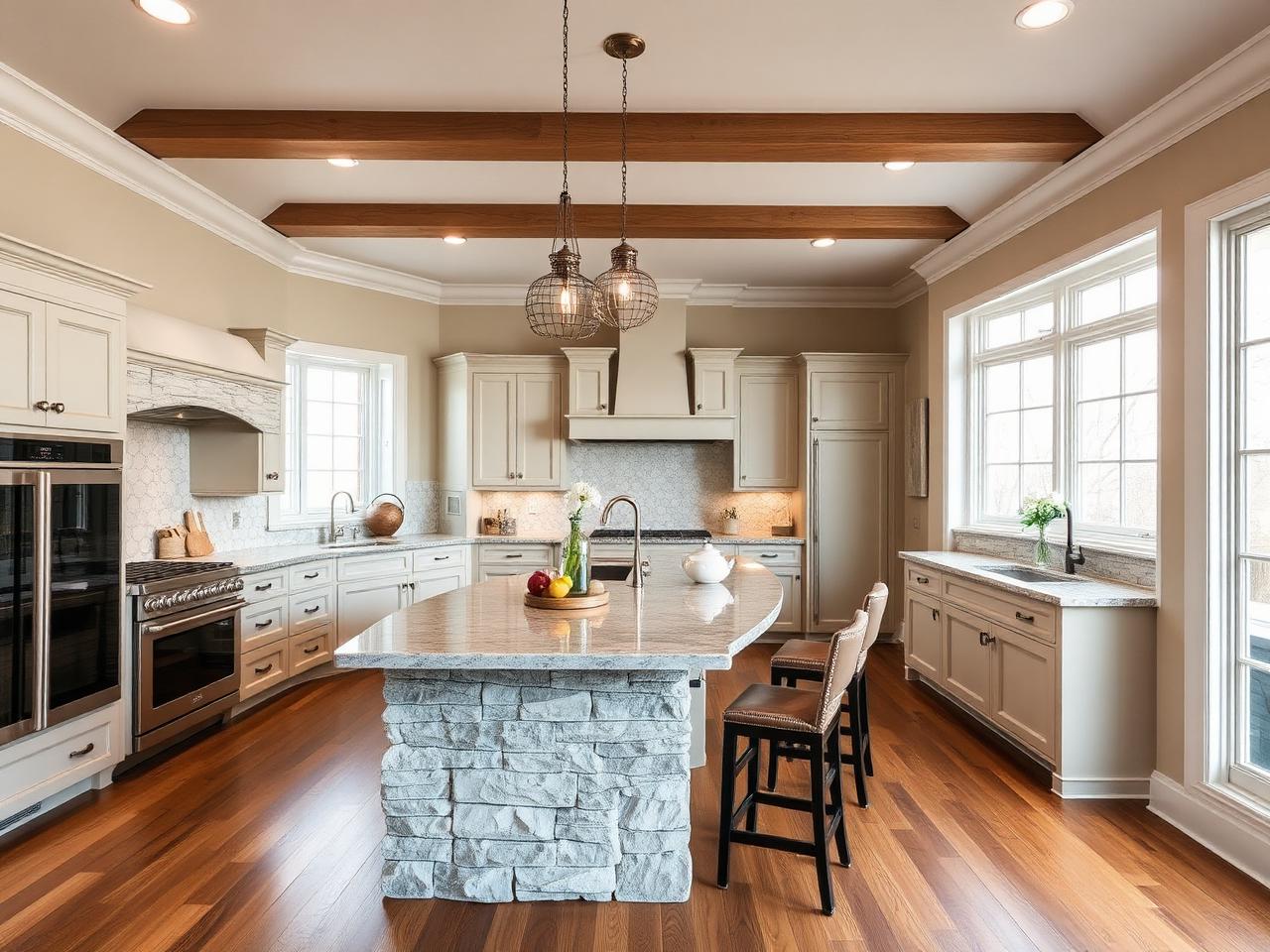
Brownstones across Back Bay, Beacon Hill, and the South End come with three immovable constraints: load-bearing masonry on every party wall, low ceilings on the parlor and garden levels, and landmark commission approval over anything visible from the street.
Read the bones before drawing
Where is the original chimney? Where is the bay window? Where is the dumbwaiter shaft? In a brownstone, the kitchen layout is downstream of decisions made in 1875. Honor them or pay for them.
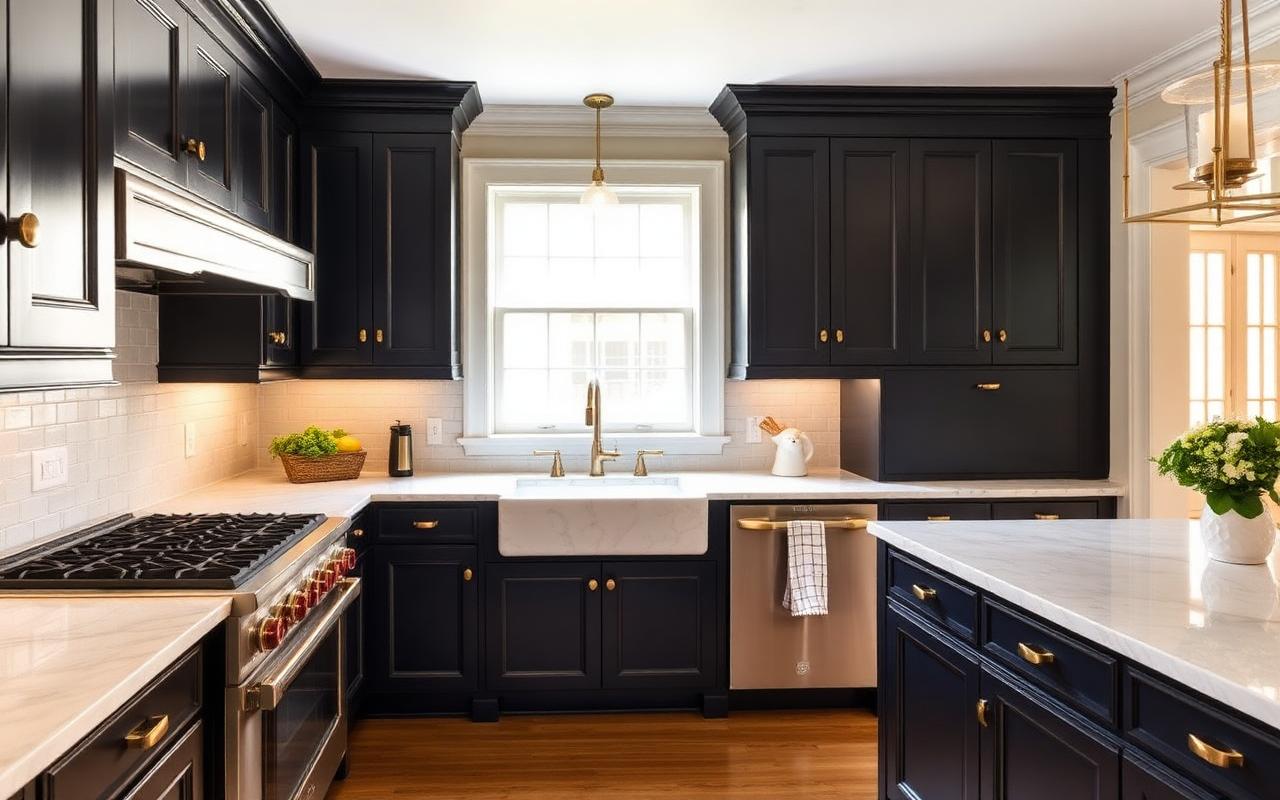
Inset shaker is the right grammar
Handleless slab cabinetry fights the architecture. Inset shaker in a deep paint (navy, charcoal, oxblood) with unlacquered brass hardware is period-correct and aging gracefully into 2026.
Ceilings, ducts, and the hood problem
Brownstone garden-level ceilings are often 8'2"–8'6" with deep beams. A 12-inch hood duct cannot run perpendicular to the joists without dropping the entire ceiling. Plan the hood location and duct path before anything else.
Landmark commission considerations
- ·Any window replacement visible from a public way needs approval
- ·Exterior venting through the facade is generally not approved — vent through a side yard or rear
- ·Mechanical units visible from the street are restricted
- ·Interior changes are unrestricted, but structural work needs separate permits
The brownstone budget premium
Plan 20–35% above the equivalent MetroWest budget for the same finish level. Structural complexity, restricted access, and parking realities all add cost — and they are not optional.
20–24 wks
typical construction window for a brownstone kitchen — twice a suburban project
Action items
0/7 · 0%Brownstone kitchen planning checklist
Working with historic fabric
A brownstone kitchen renovation is partly a kitchen project and partly an archeology project. The chimney that bisects the rear wall is not just a constraint — it is a structural and historic element you must decide how to handle. Removing it is expensive and requires structural engineering for the floors above. Boxing around it adds character but eats footprint. Exposing the original brick reads beautifully but requires sealing and may compromise the wall's R-value. There is no universally right answer; there is only a right answer for your specific home, budget, and aesthetic.
Pros and cons of a brownstone kitchen project
Pros: the architectural shell rewards confident design, the historic neighborhood adds permanent value, the level of craft from a good Boston millwork shop is unmatched, the finished room becomes a genuine piece of Boston architecture.
Cons: 20–35% budget premium over equivalent suburban work, 4–6 month longer schedule, restricted street access for materials and dumpsters, landmark approval for exterior changes, surprise structural conditions discovered behind plaster, parking and elevator scheduling that turns 2-hour deliveries into 6-hour ones.
Step-by-step planning guide
- ·Commission an as-built survey before you sign with a designer — it will pay for itself ten times
- ·Engage a structural engineer to identify load-bearing walls and existing beam capacity
- ·Have an asbestos and lead survey done on any pre-1978 plaster you'll disturb
- ·Confirm the hood venting path with your contractor before drawing cabinetry — many brownstones cannot vent through the rear wall
- ·Submit any exterior changes to the landmark commission as early as possible (8–16 week approval window)
- ·Reserve parking permits and a dumpster zone with the city before demolition starts
- ·Plan elevator scheduling with your building manager — most brownstones have no service elevator and you'll need to coordinate every delivery
- ·Build a 15–20% contingency into your budget specifically for unforeseen historic conditions
Design moves that work in historic shells
Deep paint colors (oxblood, ink navy, charcoal) on inset shaker cabinetry pull the room together visually and forgive the irregularities of historic walls. Unlacquered brass hardware develops a patina that matches the building. Honed soapstone or honed marble counters read as period-correct without leaning into pastiche. Avoid handleless slab cabinetry, polished stone, and any high-gloss finish — they fight the architecture and never fully win.
Practical tips from twenty Boston projects
- ·Order cabinetry from a shop that has built for brownstones before — they will know how to scribe to out-of-square walls
- ·Specify removable kick panels so future plumbing access doesn't require destroying cabinetry
- ·Use freestanding-style millwork at the range and refrigerator — it photographs and lives better in a historic room
- ·Plan the trash room location early; brownstones rarely have side yards and trash storage is a real design problem
- ·Negotiate the construction calendar with neighbors — early notice prevents complaints that delay permits
- ·Budget for a smoke detector and CO upgrade across the whole floor — most permit reviews require it
The brownstone mindset shift
You are not designing a kitchen in a building. You are designing a kitchen as part of a 150-year-old building's continuing life. The brownstone is the senior partner; the kitchen is the new associate.
A Beacon Hill case study
A Beacon Hill garden-level kitchen we completed last year illustrates the brownstone calculus. Ceiling height 8'4" with three deep beams running perpendicular to the proposed hood location. Original chimney bisecting the rear wall. Existing soil stack in the optimal range location. Landmark commission jurisdiction over the rear-facade venting. The solution: relocate the range to the chimney wall and use the chimney itself as the hood vent path (after structural and historic review), build the island in two separate pieces to clear the central beam, and run all uppers to within 3" of the lowest beam to maintain visual continuity. Final result: a 11-ft kitchen that lives like 15, all permits approved on first submission, completed in 22 weeks.
Specification choices that respect the architecture
- ·Inset shaker cabinetry in a deep paint (oxblood, ink navy, charcoal) over MDF or tight-grain hardwood
- ·Unlacquered solid brass hardware — let it patina, do not lacquer over it
- ·Honed (not polished) soapstone or honed Calacatta marble counters
- ·Subway, glazed brick, or zellige backsplash in warm tones — never glossy white
- ·Antique or vintage decorative pendant (or a contemporary one with period proportions)
- ·Wide-plank rift oak floors with a low-sheen finish — never high-gloss
- ·Plaster walls and ceilings repaired in kind, never replaced with drywall in primary rooms
Working with city inspectors and landmarks
Boston's permitting culture is its own subspecialty. Different inspectors interpret the same code differently; the same plan submitted twice can get different feedback. Build relationships through your contractor — they have done this before with the inspectors you will work with. Submit landmark applications as early in the process as possible — 8–16 weeks is realistic for first review, and any revision restarts the clock. Document existing conditions photographically before any demolition; if you discover original detail mid-project, you may have to preserve or replicate it under landmark rules.
Budget calibration by brownstone tier
- ·Garden-level renovation, modest scope: $180–280K all-in for the kitchen
- ·Parlor-level full renovation: $280–420K all-in for the kitchen
- ·Whole-floor restoration with full architectural detail: $420–700K+
- ·Add 15–20% if your renovation includes structural removal of a load-bearing wall
- ·Add 10–15% if landmark review requires custom replication of any original element
Interactive · estimator
Plan your brownstone kitchen
We'll send a tailored cost range that accounts for the brownstone premium — including structural and access realities.
Open estimatorFAQ
Frequently asked questions
Interior changes generally don't require landmark approval. Anything visible from a public way — windows, exterior venting, facade-mounted mechanicals — does, and approval can add 8–16 weeks to your schedule.
Next step