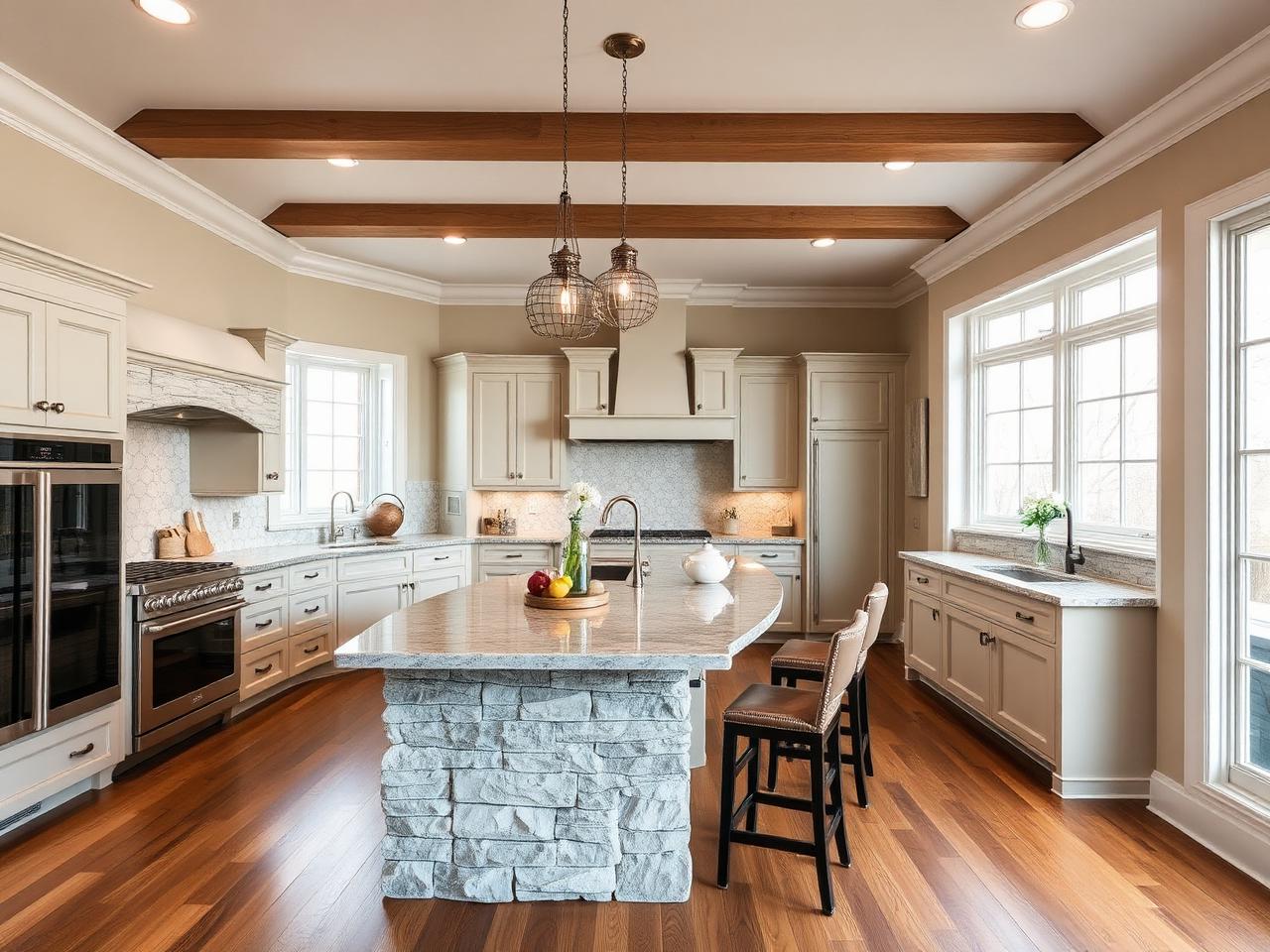
Salt air, seasonal occupancy, weekend gatherings of twelve, and a year of off-season closure. Coastal kitchens face a specific set of demands that inland luxury kitchens never see.
Materials that survive salt air
Salt air corrodes hardware, dulls finishes, and accelerates wood movement. The materials that perform: stainless steel (304 grade minimum), solid brass with a protective patina, marine-grade plywood substrates, and stones that don't react to humidity (quartzite over marble).
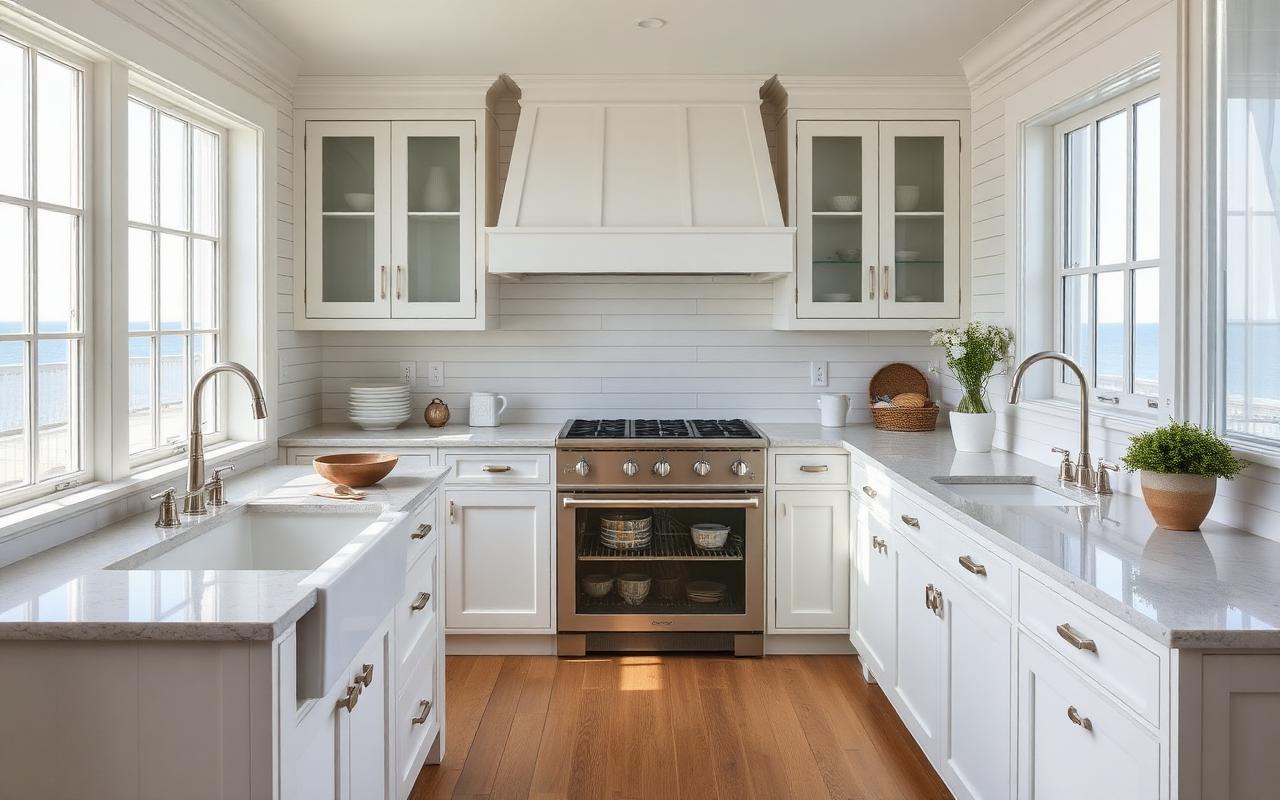
Layout for the weekend invasion
A coastal kitchen serves four people for ten months and twenty people for two. Design for the twenty: oversized island, second beverage station, walk-in pantry, double dishwasher. The four are easy; the twenty break a normal kitchen.
The off-season factor
- ·Specify appliances with shutdown modes (not all do)
- ·Plan plumbing winterization routes — exposed runs are a freeze risk
- ·Choose finishes that tolerate two months of unconditioned air
- ·Avoid sensitive electronics in the main island where humidity collects
Design language that doesn't fight the setting
Pure white cabinets with brass hardware reads dated. The 2026 coastal vocabulary leans into oyster grays, soft greiges, natural oak accents, and soapstone. Shiplap, sparingly. Beadboard, almost never.
The 80/20 rule of coastal materials
Use 80% of the toughest material your aesthetic allows, and 20% of the most beautiful material that the climate can tolerate. The toughness keeps the kitchen functional; the beauty keeps it luxurious.
2x
the maintenance hardware in a salt-air home needs vs. an inland kitchen
Action items
0/7 · 0%Coastal kitchen design checklist
The coastal client's two timelines
A Cape Cod or North Shore kitchen serves two completely different timelines: a weekday timeline of four people in the off-season, and a weekend timeline of fifteen during peak. Most coastal kitchen failures come from designing only for one. Design for both — quiet, warm, and intimate for two; durable, scalable, and high-throughput for fifteen — and the kitchen succeeds in every mode. Skip either, and the kitchen feels wrong for two-thirds of its life.
Pros and cons of coastal-luxury construction
Pros: the architectural setting elevates even modest design, oversized kitchens are easier to justify (entertaining is the point), the salt-air constraint pushes specifications toward genuinely better materials, daylight is unmatched almost any time of year.
Cons: 15–25% material premium for marine-grade construction, hardware will need refinishing or replacement every 8–12 years, off-season closure adds planning complexity, restricted access and parking on Cape and Nantucket can extend schedule by months.
Material guide for salt-air environments
- ·Cabinet hardware: 304-grade stainless or solid brass; avoid chrome and any plated finish
- ·Cabinet substrates: marine-grade plywood or sealed Baltic birch; never MDF in exterior walls
- ·Cabinet finish: catalyzed conversion varnish; avoid latex or any water-based topcoat
- ·Stone: quartzite or engineered quartz; marble is workable but requires annual resealing
- ·Floors: rift oak with marine spar varnish, or honed limestone — never engineered wood
- ·Appliance fronts: 304-grade stainless or panel-ready; standard stainless will pit within 5 years
Layout strategies for seasonal use
Design a clear hierarchy of zones that scale from four to twenty. A 12+ foot island handles plating and bar service during a party and becomes the family table for daily breakfast in the off-season. A walk-in pantry doubles as a beverage station for parties and as bulk storage in the off-season. A secondary sink at the island removes 80% of party-time bottlenecks. Two dishwashers — one in the main run, one in the island or pantry — handle weekend gatherings without the after-party second shift.
Off-season closure planning
- ·Choose appliances with documented shutdown and vacation modes
- ·Plan plumbing runs that can be winterized — no exposed pipes on exterior walls
- ·Specify a low-set thermostat program for the off-season to prevent humidity damage
- ·Avoid sensitive electronics in the island; humidity collects there
- ·Install a leak-detection system with auto shutoff for the months you are not there
- ·Plan for off-season ventilation; sealed kitchens grow mold and stale air faster than any other room
Aesthetic vocabulary that wears well
The 2026 coastal vocabulary has moved past white-and-blue nautical. The current language: oyster grays, soft greiges, natural oak accents, honed soapstone or limestone, brass with a protective patina, and shiplap used sparingly as a single architectural moment rather than a wall-covering. Painted inset shaker in muted color reads as period-correct in Shingle-style and Cape architecture. Beadboard, lobsters, and rope detailing read dated within five years; if you cannot resist coastal motifs, confine them to removable objects, not built-ins.
The coastal trade-off worth accepting
You will spend more time on maintenance than an inland luxury home requires. Hardware will need replacing or refinishing on a schedule. The trade is that the kitchen sits inside one of the best architectural and natural settings in America. The math works out — every time.
A Chatham case study
A Chatham waterfront home we completed in 2024: 380 sq ft kitchen, used four months heavily, two months moderately, six months closed. The brief: must host 18 for clambake nights, must close down cleanly for the winter, must survive salt air on a south-facing exposure without high-maintenance materials. The solution: painted poplar inset shaker over Baltic birch with catalyzed varnish (handles humidity cycles), honed Taj Mahal quartzite for counters (no etching, no reactivity), a 13-ft single-slab island with double dishwashers flanking the prep sink, a walk-in pantry that doubles as bar service during parties, and all 304-grade stainless or solid brass hardware. Off-season closure routine: drain exterior lines, set HVAC to 55°F with humidity below 50%, unplug sensitive electronics, leave fridge in vacation mode. Three years in, zero hardware refinishing required, zero finish issues, zero stone problems.
Designing for the largest weekend, not the average week
The single biggest design shift for coastal homes: size for the largest realistic gathering, not the daily occupancy. A 12+ ft island that feels generous for a family of four becomes essential during a weekend of fifteen. A second sink and a second dishwasher feel like luxury for four and like survival for fifteen. A walk-in pantry that holds two weeks of groceries for four can also stage cocktail service for thirty. The marginal cost of designing for the peak is small; the marginal value during the peak weekends is enormous. Coastal kitchens that fail at scale are universally regretted; coastal kitchens that scale well are universally celebrated by their owners.
Hardware and finish maintenance schedule
- ·Wipe all visible hardware monthly with a soft cloth and dilute pH-neutral cleaner
- ·Annual deep-clean of brass with a non-abrasive metal polish (or accept the patina)
- ·Annual reseal of stone counters; quartzite every 2–4 years if traffic permits
- ·Inspect cabinet face frames for seasonal panel movement; address with conversion-varnish touch-up
- ·Replace any pitted or rusted hardware before it spreads — pitting accelerates after the first failure
- ·Vacuum and clean all hinges twice a year; salt and sand work into mechanisms
- ·Annual HVAC service that includes humidity calibration — coastal homes shift faster than inland
Smart home and security in seasonal homes
Coastal seasonal homes increasingly include integrated smart-home systems for off-season monitoring: leak detection with auto shutoff, temperature and humidity monitoring with alerts, remote HVAC control, security cameras with off-season schedules, and remote oven shutoff for the inevitable 'did I leave the stove on' moment as you drive away in October. Budget $4–12K for an integrated system across a luxury coastal kitchen — the peace of mind through the off-season is genuinely worth it.
Interactive · estimator
Estimate your coastal kitchen
We'll send a tailored range that accounts for the coastal premium — durability, scale, and off-season planning.
Open estimatorFAQ
Frequently asked questions
Painted hardwood (tight-grain maple or poplar) over marine-grade plywood substrate, finished with a catalyzed conversion varnish. Avoid MDF and unsealed natural woods in salt-air environments.
Next step