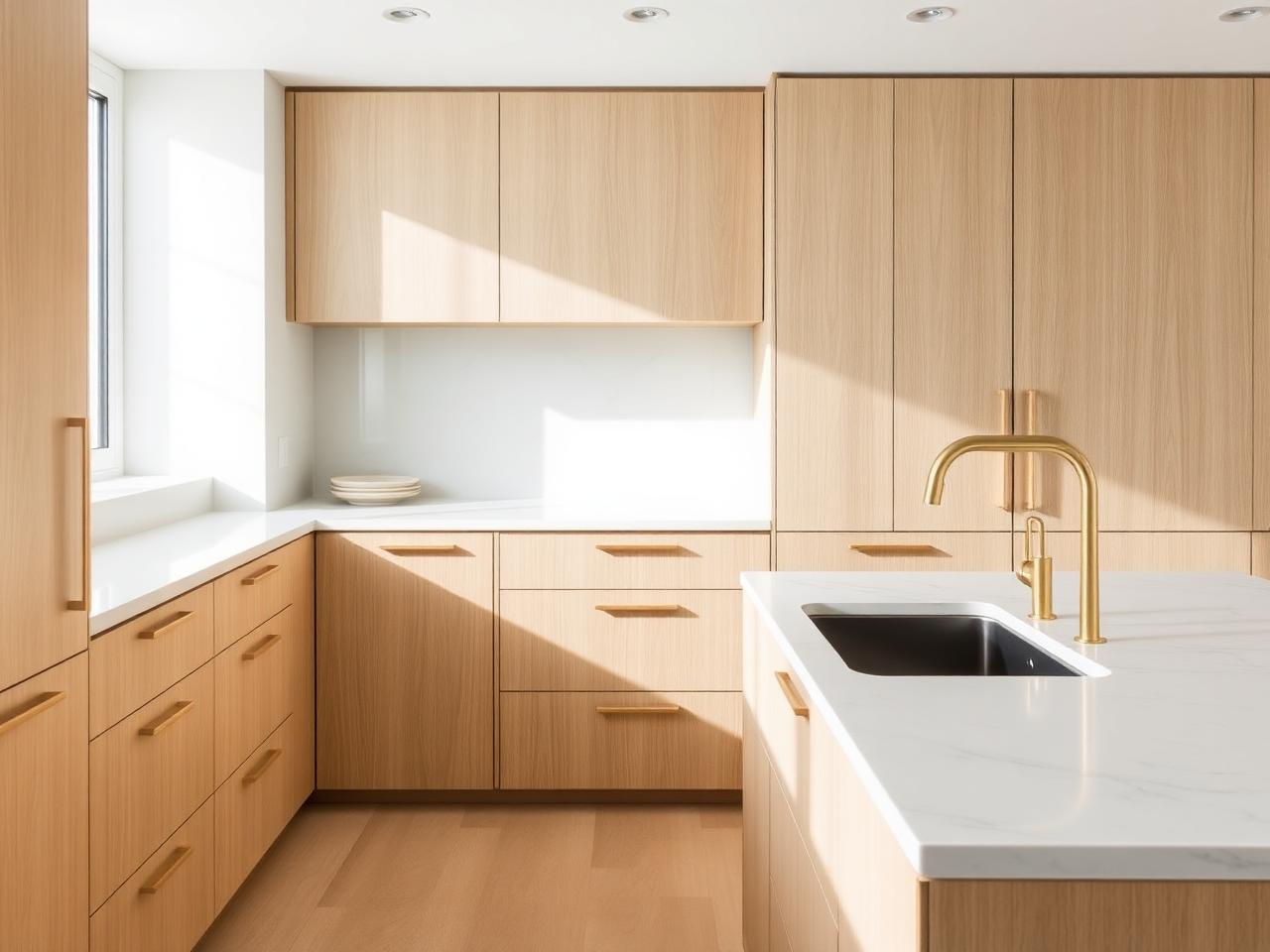
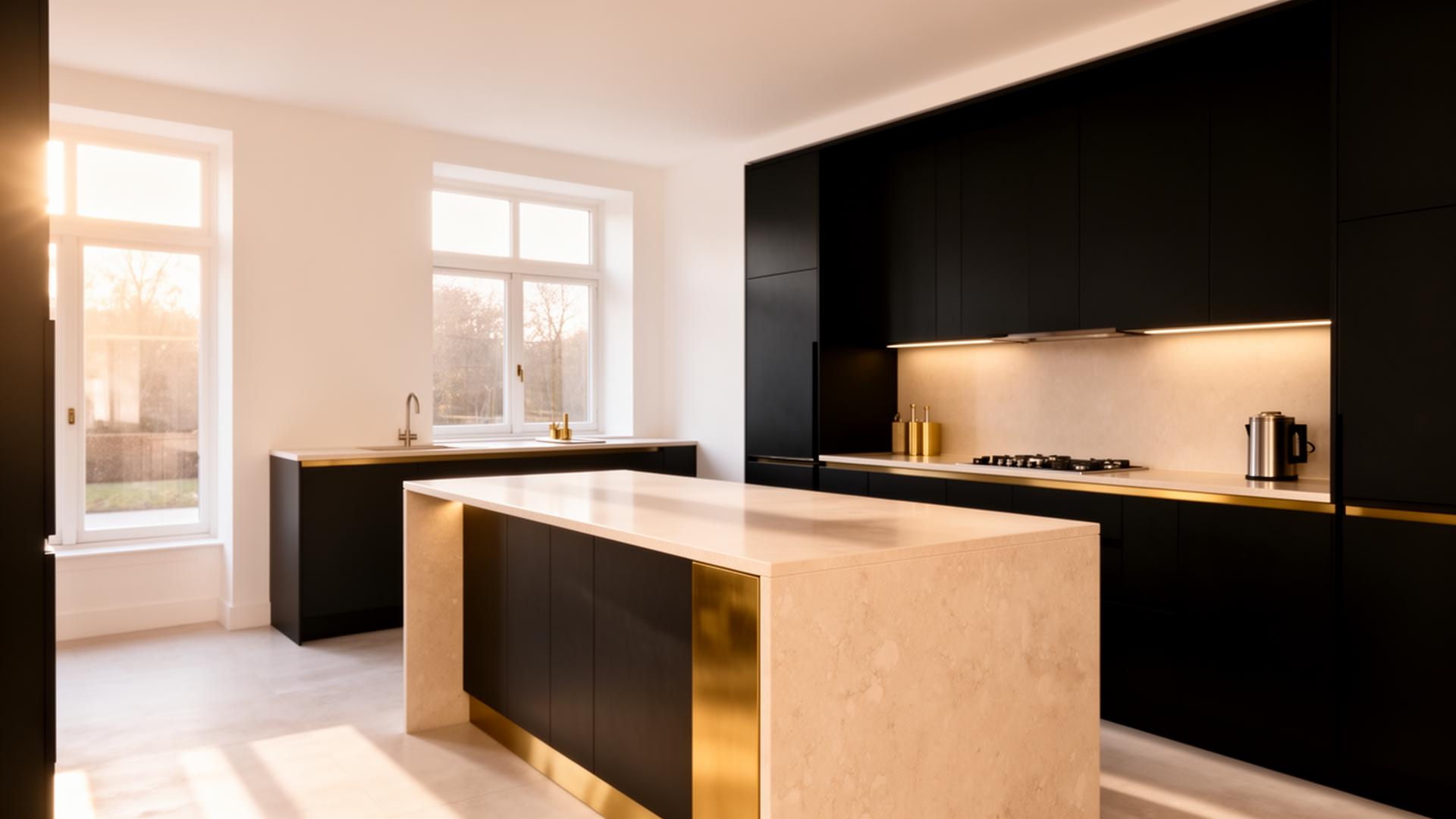
Most kitchen islands are sized for photos. The ones that work for entertaining are sized for behavior. Here is how we design islands for clients who genuinely host — not who say they will.
Size for the largest meaningful gathering
- ·4–6 guests, weeknight: 8 ft island, 3 stools, single prep zone
- ·8–10 guests, weekend: 10–11 ft island, 4–5 stools, prep + plating zones
- ·Holidays, 12+ guests: 12 ft+ island OR two islands (prep + gathering)
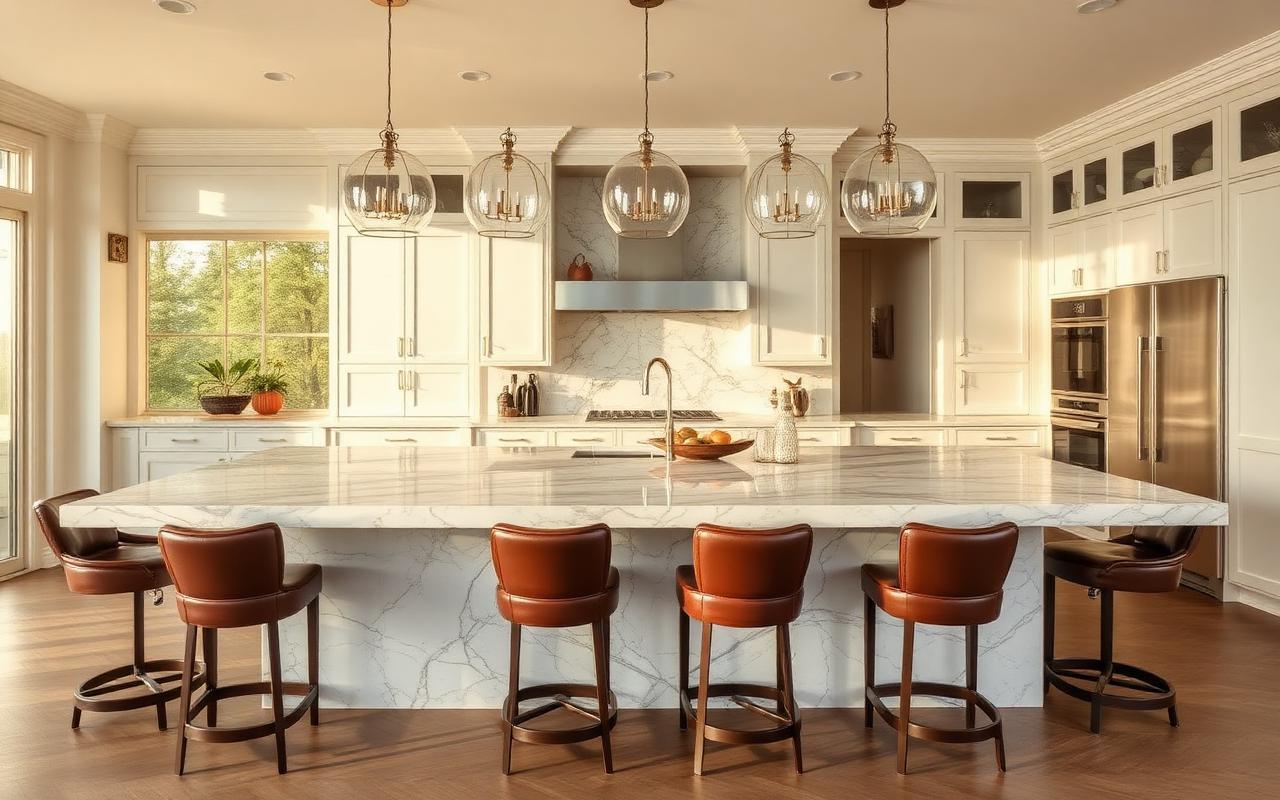
Separate prep from social
The fastest way to ruin an island for entertaining is to put the cooktop in the middle of it. Guests can't sit near a hot surface. The cooktop belongs on the perimeter; the island stays clean for plating, drinks, and conversation.
Seating that people will actually use
Counter-height stools (24 inches) read more inviting than bar-height (30 inches). Backed stools beat backless three to one in actual sit-time. Leave 26 inches of width per seat — 24 is the minimum, but reads cramped.
The hidden infrastructure
- ·Two countertop outlets, hidden under the overhang or in pop-up canisters
- ·A second sink for drinks prep (15" undermount is enough)
- ·A wine column or undercounter fridge on the guest side
- ·A trash and recycling pullout near the prep zone — not the social zone
- ·An induction warming drawer for plating service
26"
ideal seat width on a counter — 24" feels cramped, 28" looks empty
The entertainer's secret weapon
A 12-inch overhang on the seating side is comfortable. A 15-inch overhang is luxurious. Anything less than 12 puts your guests' knees into the cabinet — they will not say anything, but they won't sit there a second time.
Action items
0/7 · 0%Entertainer's island checklist
The two-zone island
The single biggest island upgrade for entertainers is dividing it into a working zone and a social zone. The working zone holds the prep sink, knife rack, trash pullout, and one work outlet. The social zone holds the seating, beverage fridge or wine column, and decorative pendants. Guests gravitate to the social zone; the host stays on the working zone. Nobody is in anybody's way, and the kitchen functions during a party instead of becoming a bottleneck.
Pros and cons of larger islands
Pros of going 10–14 ft: real entertaining capacity, room for 4–6 seated guests, dedicated prep + plating zones, dramatic visual centerpiece, accommodates a wine column or beverage fridge on the social side.
Cons of going 10–14 ft: walking distance across the kitchen increases (plan for 4–5 ft clearance on all sides), single-slab stone becomes expensive or impossible (plan seams early), structural floor reinforcement may be required for the weight, and the kitchen feels empty when only two people are home.
Practical sizing guide
- ·Under 8 ft: best as a working island only — seating compromises both prep and social use
- ·8–9 ft: 2–3 seats plus a working zone, fine for casual hosting
- ·10–11 ft: 3–4 seats plus dedicated prep + plating zones, true entertaining capacity
- ·12 ft+: 4–6 seats plus a beverage station; consider two islands above 14 ft instead
- ·Two-island layouts: 5–6 ft of clearance between them, one for prep, one for service
Hidden infrastructure that makes the difference
Power, water, and lighting integration are what separate islands designed for entertaining from islands designed for photographs. Two hidden outlets per seating zone (pop-up canisters or under-the-overhang receptacles) keep cords off the counter. A prep sink with a high-arc faucet handles drink service and produce rinse without monopolizing the main sink. Toe-kick LED strips give the island a low-light evening mode that doubles as cocktail-hour ambient. Pendants on a dedicated dimmer let the host shift the room from cooking light to dinner light without leaving the island.
Seating that actually invites use
- ·Counter-height (24–26") stools beat bar-height (28–30") for actual sit-time, three to one
- ·Backed stools beat backless for every metric — comfort, sit-time, perceived hospitality
- ·Leather or performance upholstery survives the food, drink, and child-related accidents
- ·Swivel mechanisms make the difference between conversational and isolating seating
- ·Plan 26 inches of seat width per person — 24 reads cramped, 28 looks under-populated
- ·Specify a 12-inch minimum seated-side overhang, 15 inches if structurally possible
The five-minute test before you sign
Tape the island footprint on your existing floor at full scale. Put a chair where each stool would go. Walk the perimeter as if you were carrying a hot pan from the cooktop. Open the imaginary dishwasher next to it. Stand at the sink and look out. If anything feels off at full scale, it will feel off in the finished kitchen — no rendering catches this. Trust the tape.
The entertainer's invisible upgrade
Add a small refrigerated drawer or 15" undercounter wine fridge on the social side of the island. It removes 80% of the host's trips back to the main fridge during a party and is the single feature returning clients ask us to add to their next kitchen.
A Wellesley entertainer's case study
A Wellesley client who hosts roughly twelve dinner parties a year, four of which exceed sixteen guests, asked us to design specifically for the largest gatherings rather than for the daily four. The result: a 13-ft single island with a working zone at one end (prep sink, induction cooktop with downdraft on the perimeter wall, two trash pullouts) and a social zone at the other (15" wine fridge, beverage drawer, integrated ice maker, five backed counter stools with 15" overhang). The island became the gravitational center of every party — the host stayed productive on one end while up to seven guests gathered on the other. Day-to-day with two people, the island feels like a generous workspace, not an empty stadium. Designing for the peak, with thoughtful zoning, made the kitchen work at every scale.
Pre-party choreography that the island enables
Think through a 20-guest cocktail-to-seated-dinner choreography and the island's role in each phase. Arrival: guests gather on the social side around drinks; the host garnishes from the working side. Cocktail hour: passed apps come off a sheet pan on the working zone, drinks stay on the social side. Plating: the working zone becomes the plating line; the social zone holds finished plates and tableware. Service: guests carry their plates from the island to the table. Cleanup: dishes return to the dishwasher on the working side; the social zone becomes the late-night dessert and digestif station. The right island supports each phase; the wrong island bottlenecks at one.
Practical infrastructure checklist for entertainers
- ·15" undercounter beverage fridge or wine column on the social side
- ·Integrated ice maker (separate from the freezer) if you regularly serve cocktails
- ·Pop-up outlets or under-overhang receptacles on every seating zone
- ·Trash + recycling + compost pullouts at the prep zone, not the social zone
- ·Dedicated knife block drawer with magnetic insert at the prep zone
- ·USB charging in at least one stool position — phones come out at parties
- ·Pendant lighting on a separate dimmer from ambient — dinner and dessert want different light
- ·Floor outlet under the island for any catering equipment that needs power away from the wall
Sizing pitfalls to avoid
Two common island-sizing failures we see repeatedly. First: oversizing for a hosting pattern that never materializes — a 14-ft island in a household that hosts twice a year reads as architectural overcompensation and makes daily life feel staged. Second: undersizing because the room could fit larger but the budget was protected — an 8-ft island in a 22-ft kitchen feels diminished by the surrounding space. Right-size honestly: count your largest actual gathering over the last two years (not aspirational), and design for that number, not for the entertaining you wish you did.
Interactive · quiz
Find your ideal island setup
Three questions about how you actually entertain. We'll suggest a sizing and feature plan.
Take the quizFAQ
Frequently asked questions
10–12 feet for a single island that supports 4–5 stools plus a working zone. Below 9 feet, you sacrifice either seating or prep. Above 14 feet, design two islands instead.
Next step