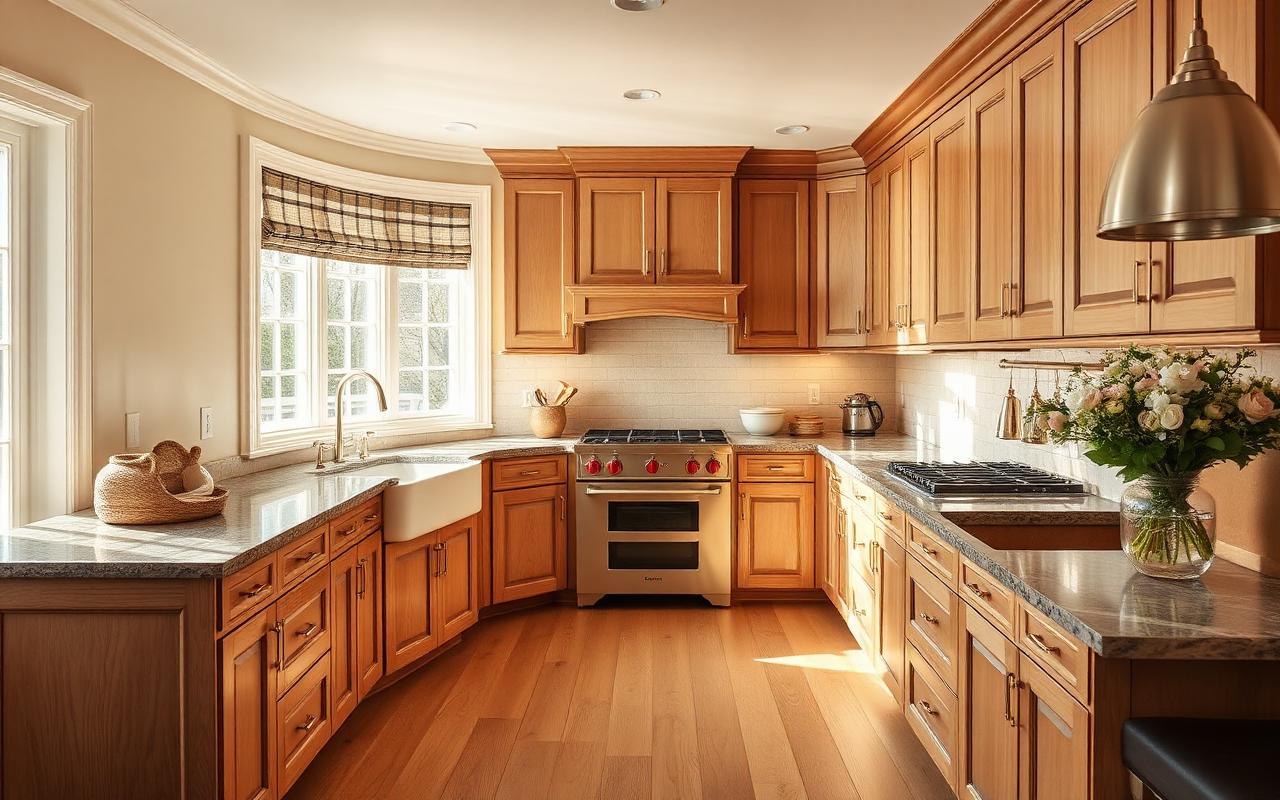
We specify all three. They are not interchangeable, and the price tags do not tell the full story. Here is the honest field comparison.
Marble — beautiful, alive, and demanding
True Italian marble (Calacatta, Statuario, Carrara) develops a patina. Lemon juice etches it. Red wine ghosts. If you can accept those marks as character, no other material has the same depth. If you cannot, do not specify marble — no sealer will save you.
Quartzite — natural stone, much harder
True quartzite (Taj Mahal, Mont Blanc, Calacatta Macaubas) is 7 on the Mohs scale — harder than glass. Doesn't etch from acids. Looks remarkably like marble when well-selected. The current default for clients who want the look without the maintenance.
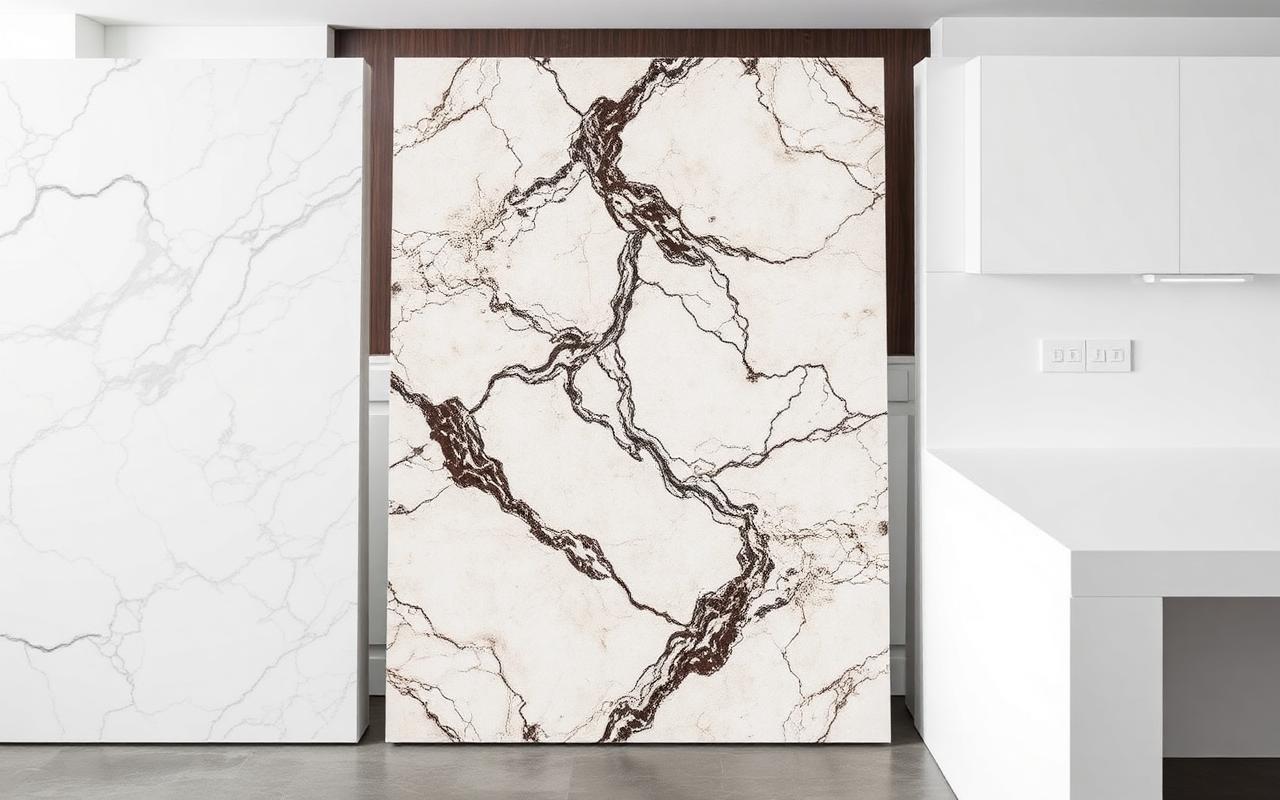
Engineered quartz — consistent and bulletproof
Polymer-bonded crushed stone (Caesarstone, Cambria, Silestone). Completely uniform, no etching, no staining, no sealing. The look has improved dramatically — top-tier quartzes are now hard to distinguish from real stone in photos. In person, the depth difference is still real.
Cost ranges (installed, MA, 2026)
- ·Engineered quartz: $80–$160 per sq ft installed
- ·Quartzite: $130–$280 per sq ft installed
- ·Marble (Carrara/Calacatta): $120–$350+ per sq ft installed
- ·Exotic bookmatched marble or quartzite: $400–$900+ per sq ft installed
The one question that decides
Will the cooks in your house treat etching and patina as character or as damage? If patina, marble is the answer. If damage, choose quartzite for the look or quartz for the budget.
Action items
0/6 · 0%Countertop decision checklist
Maintenance reality check
Maintenance is where most clients underestimate their long-term commitment. Marble needs annual resealing and accepts patina as a feature, not a bug. Quartzite needs sealing every 2–4 years depending on porosity and survives almost any kitchen accident. Engineered quartz needs nothing — no sealing, no special cleaner, no precautions — but it is permanently damaged by heat above 300°F, which means trivets and cooling racks are mandatory near the cooktop. None of these are bad; they are just different commitments.
Pros and cons by material
Marble — Pros: unmatched depth, veining, and cool tactile feel; the only stone serious bakers prefer; ages into a soft patina that genuinely improves with use. Cons: etches from any acid (lemon, wine, vinegar), stains from oil and pigmented liquids, requires resealing, scratches under heavy use.
Quartzite — Pros: 7+ Mohs hardness means no etching, very strong stain resistance, dramatic veining options that rival marble, holds heat well. Cons: thin or exotic slabs can be brittle at unsupported overhangs, sealing required, price often equals or exceeds marble for top-tier slabs.
Engineered quartz — Pros: zero maintenance, identical-to-sample consistency, available in any size without seams, hardest to damage. Cons: heat-sensitive, depth and tactile feel still distinguishable from natural stone up close, the very white quartzes can yellow under direct UV over 10+ years.
Practical specification tips
- ·Always view full slabs at the stone yard before committing — sample chips lie about veining and movement
- ·Reserve and tag specific slabs in writing; popular bookmatched pairs disappear in days
- ·Confirm the fabricator can deliver the edge profile you want — mitered 2" edges require advanced equipment
- ·For islands over 9 ft, plan for an invisible seam location and discuss it during slab selection
- ·Specify a 3 cm slab for islands (not 2 cm) — the visual weight matters at this scale
- ·Ask for a sample of the exact sealer on a corner of your slab — sealer changes color slightly
- ·On marble, accept patina as part of the contract — clients who fight it are universally unhappy
- ·On quartz, choose a movement-rich pattern (not pure white) to disguise the inevitable surface marks
Edge profiles and how they read
Edge profile is the easiest place to over- or under-spec a luxury kitchen. A simple eased edge reads modern and lets the stone do the talking. A 2" mitered edge reads luxurious and substantial without being ornate. Ogee, dupont, and other traditional profiles read formal and tend to age poorly. Bullnose belongs in commercial kitchens, not luxury homes. Match the edge to the cabinetry vocabulary: slab cabinets want eased or mitered; inset shaker tolerates a soft pencil round; nothing tolerates ogee in 2026.
Sustainability and sourcing
Marble and quartzite are mined; engineered quartz is manufactured from crushed mineral and resin. The carbon footprint of engineered quartz is roughly 2–3x natural stone per square foot installed, but it lasts indefinitely with zero maintenance inputs. Marble and quartzite have a lower upfront footprint but require periodic sealing chemicals. Neither is clearly greener; the right framing is durability and replacement frequency. A kitchen that holds for 25 years in any material beats one replaced at year 10 in the 'greener' choice.
The decision in one paragraph
Choose marble if you accept patina and prioritize beauty. Choose quartzite if you want the look of marble and the durability of granite. Choose quartz if maintenance and consistency matter more than the last 10% of visual depth. There is no wrong answer — only wrong assumptions about how you cook.
A real-project decision walk-through
A recent Cambridge client narrowed to three options for a 14-ft island: bookmatched Calacatta Borghini marble at $42,000 installed, Taj Mahal quartzite at $28,000 installed, or Caesarstone Calacatta Nuvo at $9,500 installed. All three would photograph beautifully. The deciding factor was a five-minute conversation about cooking style: two serious cooks, weekly entertaining, two young kids who use the island as homework space and craft surface. We specified the Taj Mahal quartzite. Three years later, no etching, no staining, no patina anxiety — and a kitchen that looks indistinguishable from a marble island in evening light. The right answer almost never comes from the spec sheet; it comes from how the kitchen will actually be used.
Slab selection — what to do at the stone yard
Slab selection is the highest-stakes hour of a luxury kitchen project, and most clients spend less time on it than they spend choosing a faucet. Bring printouts of your cabinetry color, hardware finish, and any other stone in the project. View slabs vertically under the yard's brightest light, then horizontally — they read completely differently. Photograph each candidate with your phone at the same angle, then compare on the drive home. Tag and reserve your specific slabs with a deposit; popular bookmatched pairs disappear within a week. Confirm the fabricator can produce the edge profile and seam plan you want on your specific slabs — not all yards have the equipment for mitered 2" edges or large-format waterfall cuts.
Pricing transparency and where money disappears
- ·Slab cost is roughly 40–55% of installed price; templating, fabrication, and installation are the rest
- ·Bookmatched pairs add 15–30% over single-slab pricing
- ·Mitered 2" edges add $40–80 per linear foot over standard eased edge
- ·Waterfall ends add $1,800–4,500 per end depending on slab and seam strategy
- ·Sink cutout, drainboards, and reveal details add $400–1,200 each
- ·Saturday or off-hours installation is sometimes 25% premium — book weekday slots early
Maintenance schedule by material
Marble: reseal every 6–12 months, daily wipe with pH-neutral cleaner, accept patina as character. Quartzite: reseal every 2–4 years, same daily care as marble, far more forgiving. Engineered quartz: zero sealing, daily wipe with anything non-abrasive, no special precautions — but never place anything above 300°F directly on the surface. Across all three: avoid acidic cleaners (vinegar, citrus-based), avoid abrasive pads, and address spills within minutes rather than hours for the best long-term appearance.
Interactive · estimator
Get a stone-aware estimate
We'll send a tailored range that accounts for your stone selection — the single biggest swing factor on countertops.
Open estimatorFAQ
Frequently asked questions
For durability, yes — quartzite resists etching and staining far better. For depth of look and patina, marble is unmatched. Choose based on how you cook, not which one is 'better'.
Next step